
GMDSS DSC Distress Alert: Procedure and Follow-Up
GMDSS GUIDE · DSC DISTRESS COMMUNICATION
DSC distress alert: understand the alert and the follow-up
A source-led study guide for deck officers and cadets learning the roles of digital selective calling and subsequent distress traffic.
Reviewed 2 October 2026.
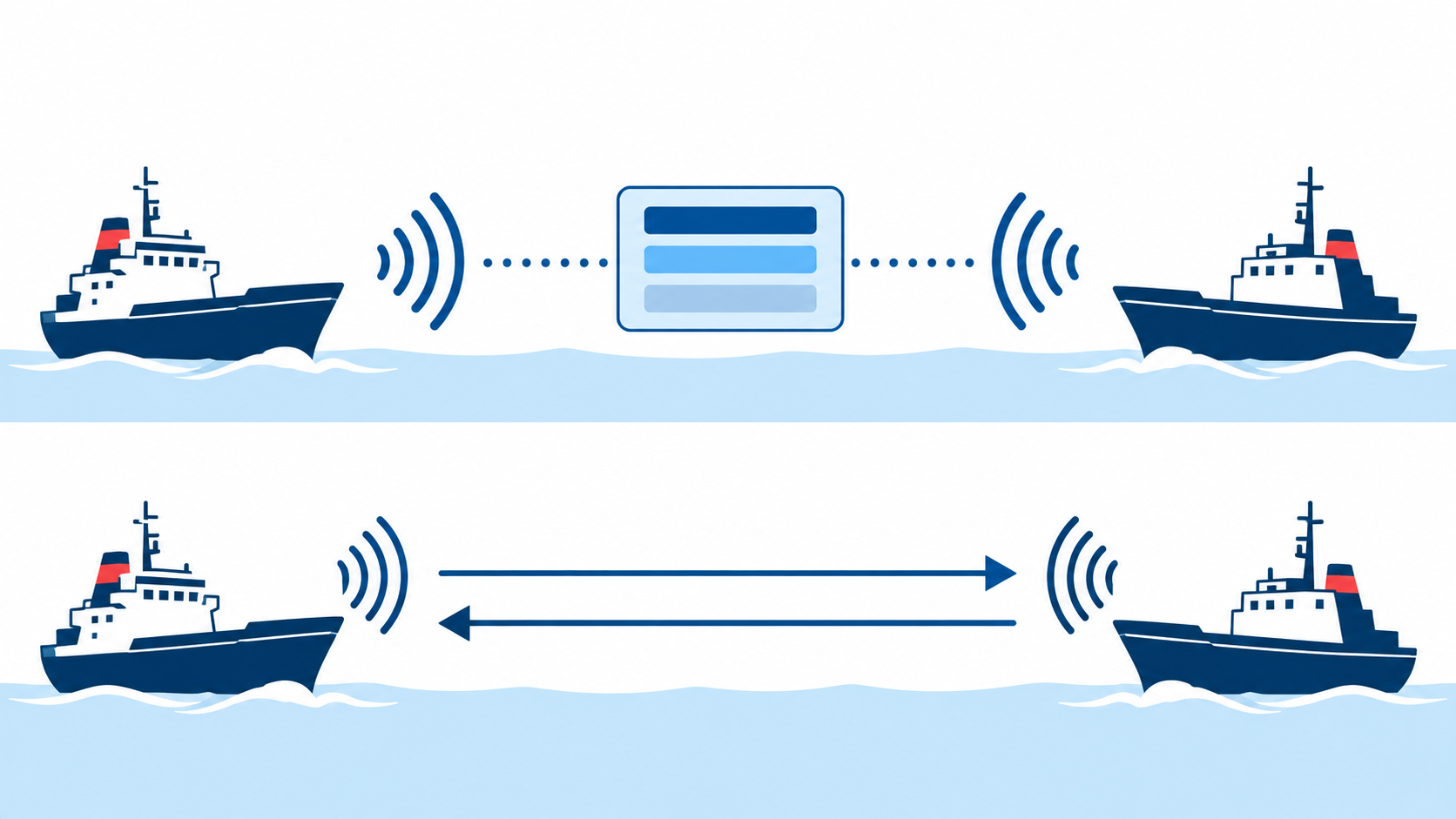
Core idea: a DSC distress alert is a standardized digital alerting message. It initiates the distress communication process; it does not automatically convey every detail needed for a complete voice or other distress exchange.
Think in three stages
The installed set sends the DSC alert through the selected radio service. Identity and position information depend on the set, its configuration and available data inputs.
Receiving stations identify the alert and apply the current procedure for their role and circumstances. Do not confuse acknowledgement rules with the distressed ship’s initial transmission.
Distress communications continue using the appropriate radio method. The required content and sequence depend on the event, radio service and current instructions.
IMO guidance for ships receiving DSC distress alerts is in MSC.1/Circ.1657/Rev.1 (6 July 2026). Read it with the relevant ITU procedures, including ITU-R M.541-11. The circular says the master must authorize a ship to send a distress alert, acknowledge one or relay it. The response steps differ by radio service.
Questions to ask when studying an alert
- Is this a real distress, a training exercise or an accidental transmission? For a real event, do not delay the approved emergency response.
- Are you studying the transmitting vessel, a receiving ship, a coast station or an RCC? Their responsibilities differ.
- Which equipment, band and radio service are stated in the scenario, and is position information available and current?
- What follow-up method and reporting are set out in the current shipboard procedure?
Menu labels, alert indications, data sources and controls vary between approved radio models and installations. Practise on the fitted equipment under supervision and use its approved manual; a generic web page should not give a button-by-button transmission sequence.
Distress, urgency and safety are different priorities
Choose the priority that matches the situation under the applicable radio procedures. A higher-priority category is not a way to attract attention to routine traffic. In an exam answer, identify the circumstances that justify the category and state which party is transmitting.
For a real emergency: Follow the vessel’s emergency plan and the master’s and RCC’s instructions immediately.