
GMDSS GOC Exam Preparation for Deck Officers and Cadets
GMDSS GUIDE · TRAINING AND EXAM PREPARATION
GMDSS GOC preparation: build operational understanding
A practical study guide for deck officers and cadets preparing for General Operator’s Certificate training and assessment.
Reviewed 2 October 2026.
STCW Chapter IV and section A-IV/2 set the international competence standards for GMDSS radio operators. The flag administration sets certificate and examination requirements. Check the rules that apply to your certificate.
A five-stage study route
Identify the vessel and voyage assumptions, applicable sea area and the purpose of each GMDSS function.
Distinguish distress, urgency and safety traffic; explain what an alert does and what follow-up communication may be needed.
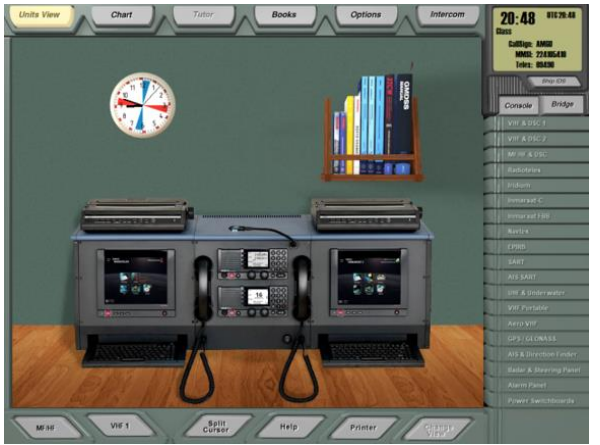
Familiarize yourself with the actual controls, indications, position input and approved instructions for each fitted set.
Connect DSC, maritime safety information, satellite services and locating devices to their different purposes.
Practise with the course equipment and assessment format; explain decisions, not only button names.
Turn topics into demonstrable competence
For each subject, prepare a short explanation that answers four questions: What is the purpose? Under what stated conditions does it apply? What would the operator observe or communicate? Which approved source or onboard procedure governs the detail? This method helps expose gaps that memorizing abbreviations can hide.
- Sea areas: explain the service-based A1–A4 definitions and why declared coverage must be checked; do not substitute a simple distance from shore.
- DSC: describe alerting separately from subsequent voice or other distress traffic. The exact response depends on whether you are the distressed vessel or a receiving station and on the current procedure.
- Safety information: identify which fitted service receives the relevant information for the route and how receipt is monitored under the ship’s arrangements.
- Locating devices: distinguish the purpose and indication of an EPIRB, radar SART and AIS-SART; they are not interchangeable.
Practise with clear assumptions
For a scenario, state whether SOLAS applies, the ship’s position or declared sea area, the available equipment, whether the ship is transmitting or receiving, and the source date. Then explain the decision. If a key fact is missing, say what you need instead of guessing.
Can you explain why an EPIRB alert and a DSC alert serve different functions? Can you state what extra facts are needed before deciding which radio installation applies to a voyage? Use these as oral revision prompts, not as a substitute for the approved assessment.
Choose reliable course material
IMO Model Course 1.25 helps training centres deliver a GOC course. It is not a certificate and does not replace STCW requirements or the flag administration’s assessment rules. It may be adapted to national needs. Keep mandatory requirements separate from training guidance and equipment familiarization.
For a real emergency: follow the vessel’s emergency plan and the master’s and RCC’s instructions immediately.